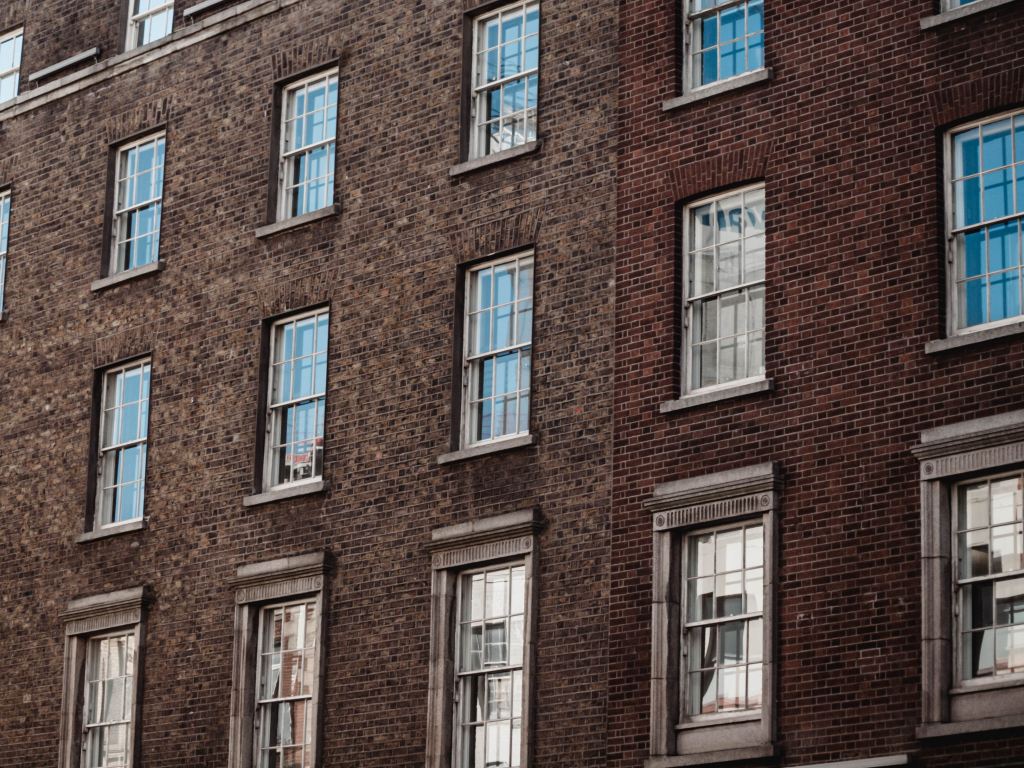
Masonry construction in the UK is a traditional practice with an inherent long-term durability that survives from as early as the Roman Empire and the 16th century. While historically reliant on local materials, modern manufacturing and nationwide distribution systems now make a vast variety of masonry raw materials available across the country. Masonry remains the preferred cladding for most structural frameworks and the major structural material in the UK house-building market.
1. Regulatory and Design Framework
Modern masonry design in the UK is currently governed by Eurocode 6 (BS EN 1996), which has largely superseded older standards like BS 5628.
• National Annexes: Because the Eurocodes allow for national choice, the UK National Annex (NA) is essential as it provides specific parameters for UK practice, such as material partial factors and specific slenderness limits.
• Building Regulations: Structural design must comply with the Building Regulations (England & Wales), particularly Approved Document A, which provides simple rules for low-rise masonry buildings. Regulation A3 specifically requires designs to resist disproportionate collapse and accidental damage.
2. Primary Materials
Masonry is a composite material comprising structural units and mortar.
• Masonry Units: The UK uses five primary unit types: clay, calcium silicate, aggregate concrete, autoclaved aerated concrete (AAC), and natural or manufactured stone. Units are classified into categories (I or II) based on manufacturing quality control and grouped (1, 1s, or 2) based on their void percentage; historically, only Groups 1 and 2 have been used in the UK.
• Mortars: These are categorized by designations (i) through (iv), with (i) being the strongest and most durable. In general, designation (iii) (strength class M4) offers the best balance for external UK walling, though M6 or M12 may be required for severe exposure.
• Ancillary Components: Components such as wall ties (butterfly, double triangle, or vertical twist), lintels, and damp-proof courses (DPCs) are critical for structural integrity and moisture management.
3. Structural Forms
• External Cavity Walls: This is the universal form for UK exterior walls. It consists of two leaves (usually 100 mm thick) separated by a 50–150 mm cavity to improve rain penetration resistance and thermal insulation.
• Geometric Walls: For tall, wide-span single-storey structures like sports halls, diaphragm and fin walls are often used as they provide structure and cladding in one trade without the need for a subsidiary steel frame.
• Structural Cladding: While masonry was once the primary loadbearing element in multi-storey buildings, it is now frequently used as an aesthetic, non-combustible envelope for steel, concrete, or timber-framed structures.
4. Construction and Detailing
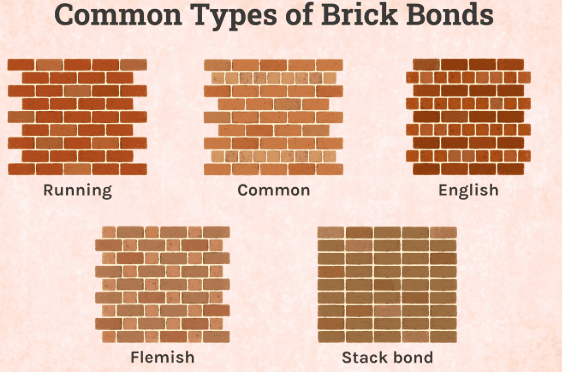
• Bonding Patterns: The interlocking of units, known as bonding, is essential for load distribution. Common patterns include Stretcher bond (typical for cavity walls), English bond, and Flemish bond.
• Moisture Protection: Because water saturation is the primary cause of deterioration (leading to frost action or sulfate attack), detailing must include copings, cappings, and sills with adequate drips and overhangs to shed water clear of the wall.
• Movement Provision: Masonry is subject to dimensional changes from temperature and moisture; for example, clay bricks tend to expand while concrete units shrink. Movement joints are required to accommodate these changes and prevent cracking.
How does vertical load impact a wall’s stability and resistance?
Vertical load, which includes a wall’s self-weight and any imposed dead or live loads from floors and roofs, significantly impacts structural stability and resistance by acting as a counter to lateral forces and as the primary factor in compressive failure.
1. Enhancement of Lateral and Flexural Resistance
Vertical load acts as pre-compression, which improves a wall’s ability to resist lateral forces like wind or retained earth.
• Flexural Strength: The masonry’s capacity to resist flexural tension is enhanced by the presence of vertical load (σd or gd). In design calculations, the characteristic flexural strength parallel to the bed joints (fxk1) is modified by adding the design vertical load per unit area (gd).
• Orthogonal Ratio: Because vertical load increases strength in the vertical spanning direction, it modifies the orthogonal ratio (μ), which is the ratio of flexural strengths parallel and perpendicular to the bed joints.
• Arching Action: A wall can resist much higher lateral pressures (such as accidental loads of 34 kN/m²) if it supports a sufficiently high vertical axial load. This vertical load allows the wall to act as a three-pinned arch within its own thickness, provided it is contained between rigid supports.
2. Stability against Overturning and Uplift
Vertical load is the primary stabilizing force for freestanding and retaining structures.
• Overturning Resistance: Walls rely on their dead weight (gravitational mass) to resist overturning moments. To ensure stability, the resultant of all forces at the base should ideally lie within the “middle third” of the wall thickness to prevent uplift and ensure the entire section remains in compression.
• Cracked Sections: If a wall has zero tensile resistance (such as at a damp-proof course or a pre-existing crack), its stability is derived solely from the vertical load acting through a lever arm.
• Wind Uplift: In lightweight structures, the vertical load must be sufficient to provide a factor of safety of 1.4 against wind suction forces that could otherwise lift the roof off the wall.
3. Impact on Shear Strength
The vertical load perpendicular to a potential failure plane significantly increases the wall’s shear resistance.
• Calculation: The characteristic shear strength of masonry (fvk) is a direct function of the initial shear strength (fvko) plus 0.4 times the design compressive stress (σd) resulting from the vertical load.
• Friction: Vertical load generates the frictional resistance necessary to prevent a wall from sliding at its base or along its bed joints.
4. Constraints: Buckling and Slenderness
While vertical load provides stability against lateral forces, it also introduces the risk of compressive failure through buckling.
• Slenderness Ratio: As the vertical load increases, a wall’s loadbearing capacity is reduced by its slenderness ratio (hef/tef). This ratio generally should not exceed 27 for walls under mainly vertical loading.
• Capacity Reduction: Designers must apply a capacity reduction factor (β or Φ) to the wall’s resistance to account for the combined effects of slenderness and any eccentricity in how the vertical load is applied.
• Eccentricity: If a vertical load is not applied at the center of the wall (eccentric loading), it induces additional bending moments that can decrease the wall’s overall stability and load capacity
How do I know if a masonry wall is unsafe?
Determining if a masonry wall is unsafe involves assessing its structural stability, the severity of any cracking, and the presence of material degradation. Because wall collapses cause a high proportion of injuries and deaths around buildings, immediate safety measures, such as propping the wall or securing the area, should be taken if its integrity is in doubt.
1. Assessing Lean and Plumbliness
A primary indicator of instability is whether the wall is out of plumb. While a wall out of plumb by up to 25 mm in a normal storey height may not require immediate repair on structural grounds alone, specific limits indicate when a wall is dangerous:
• Freestanding Walls: You should consider rebuilding the wall if it leans by more than 30 mm (half-brick thick), 70 mm (one-brick thick), or 100 mm (one-and-a-half bricks thick).
• Chimney Stacks: A stack is considered unsafe if it is leaning visibly or by more than 1 mm in 100 mm. Slender chimneys (height > 4.5 times width) showing signs of damage or leaning often require complete dismantling.
• Bulging: Repairs are generally needed if a wall bulges by more than 10 mm in a normal storey height.
2. Identifying Dangerous Crack Patterns
While minor hair cracks (under 1 mm) are often harmless, certain patterns indicate serious structural issues:
• Width and Length: Urgent attention is required for stepped cracks over 5 mm wide affecting more than 600 mm of length, or single horizontal cracks over 600 mm long that penetrate the full wall thickness.
• Location: Cracks are particularly dangerous if they occur in piers, at wall/pier junctions, near the ends of walls, or at the abutments of flat arches over openings.
• Foundation Issues: Cracks that extend through the damp-proof course (DPC) and into the foundation suggest ongoing ground movement.
3. Material and Component Degradation
The internal “health” of the wall’s materials significantly impacts its safety:
• Sulphate Attack: This causes mortar expansion, leading to bowing, leaning, and serious disintegration of the masonry. If joints are friable enough to be removed with a fingernail, structural integrity is likely impaired.
• Corroded Wall Ties: In cavity walls, the corrosion of vertical twist ties can generate expansive forces that crack mortar joints. Conversely, the corrosion of lighter butterfly wire ties may show no visible signs until the outer leaf of the wall collapses.
• Mortar Erosion: Mortar that is cracked, crumbly, or eroded to a depth of 10 mm or more requires repair to prevent water penetration, which leads to further instability.
• Embedded Metal: Rusting steel beams or stanchions can expand up to seven times their original volume, displacing masonry courses by as much as 25 mm.
4. Vulnerable Elements and Roof Issues
• Parapets and Chimneys: These are more exposed to wind and rain than any other part of a building; falling masonry from these elements poses a “real danger” to people below.
• Roof Spread: Inadequately tied pitched roofs can spread under load, displacing the masonry at the eaves by as much as 50 mm.
• Support Loss: Check the bearing area of joists and lintels; a significant loss of support in these areas is a major safety concern.
If there is any doubt about the stability of a building, professional advice from a structural engineer or the local authority (which has a statutory responsibility for safety) should be sought.
 HM Structures
Leave a comment