Open-plan living is one of the most common renovation goals in UK homes. Removing an internal wall can transform how a space feels — bringing in light, improving flow, and increasing property value.
However, not all walls are simply “partition walls.” Some are structural — and removing them without proper assessment can cause cracking, sagging floors, or even serious structural issues.
Here’s what you need to know before taking a sledgehammer to that wall.
🧱 Step 1: Is the Wall Load-Bearing?
The first and most important question is:
Is the wall structural (load-bearing), or just a partition?
A load-bearing wall supports weight from:
- Floors above
- Roof structure
- Loft conversions
- Other walls above
- Chimney breasts
Signs a Wall May Be Load-Bearing:
- It runs perpendicular to floor joists
- It sits directly above another wall downstairs
- It’s central within the house
- It supports a chimney breast
- It’s made of brick/block rather than timber stud
⚠️ These are only indicators — they are not definitive.
A structural engineer must assess this properly.
🧠 Step 2: Structural Assessment & Calculations
If the wall is load-bearing, it cannot simply be removed — the load must be safely transferred elsewhere.
Typically, this involves:
- Installing a steel beam (RSJ / UB / UC section)
- Designing appropriate padstones or bearing supports
- Checking load paths down to the foundations
- Ensuring adequate lateral restraint
The structural engineer will provide:
✔ Structural calculations
✔ Beam size and specification
✔ Bearing details
✔ Connection details
✔ Notes for Building Control
This documentation is required for Building Regulations approval.
📋 Step 3: Building Regulations Approval
In the UK, removing a load-bearing wall requires Building Control approval, even if planning permission is not needed.
Building Control will inspect:
- Beam installation
- Bearing length (typically minimum 100mm–150mm each side)
- Padstone installation
- Fire protection to steel (usually 30-minute protection)
- Lateral restraint straps (if required)
A Completion Certificate will be issued once works comply.
🔨 Step 4: Temporary Works & Installation
Before the wall is removed, the structure must be temporarily supported. Your structural engineer will specify the “end product”, but the “how” and “when” is usually determined by your builder to suit their prefered methodology/experience.
This usually involves:
- Acrow props
- Strongboy attachments
- Timber needles
This stage is critical. Poor temporary support is one of the most common causes of cracking during renovations. Make sure your builder is experienced with these sort of work to minimize the risk of damage.
Once supported:
- The wall can be carefully removed
- Padstones are installed
- The steel beam is lifted into place
- Bearings are packed and secured
- Props are slowly removed
⚠️ Things Homeowners Should Look Out For
1️⃣ Inadequate Bearing
Steel beams must sit on solid masonry — usually not timber and certainly not plasterboard.
2️⃣ Poor Load Path
Where does the load go once it reaches the end of the beam?
- Is there masonry below?
- Is the foundation adequate?
- Is there another beam beneath?
Removing a wall upstairs may overload the wall downstairs. It is therefore a good idea to consider the floor layout of the floor below to see how the beam will be supported. Engineers often visualise the forces from the elements as if it is water flowing down from the highest point (roof) to the the lowest point (foundations).
3️⃣ Fire Protection
Steel loses strength rapidly in fire.
It must be encased in plasterboard (typically 2 layers) to achieve required fire resistance.
4️⃣ Deflection (Sagging)
Even a correctly sized beam will deflect slightly.
Signs of concern:
- Noticeable sagging
- Doors sticking
- Cracks forming above beam ends
Minor hairline cracking is common and often inevitable due to the nature of the works. Significant cracking and movement is not and often suggests something went wrong.
5️⃣ Chimney Breasts
Chimney breasts are heavy and often structural.
Removing one:
- May require gallows brackets (rarely permitted nowadays by most councils)
- Or a full steel support beam (prefered option)
- Often involves Party Wall considerations (serving notices to the neighbours on the other side of the party wall).
Never remove a chimney breast without structural advice.
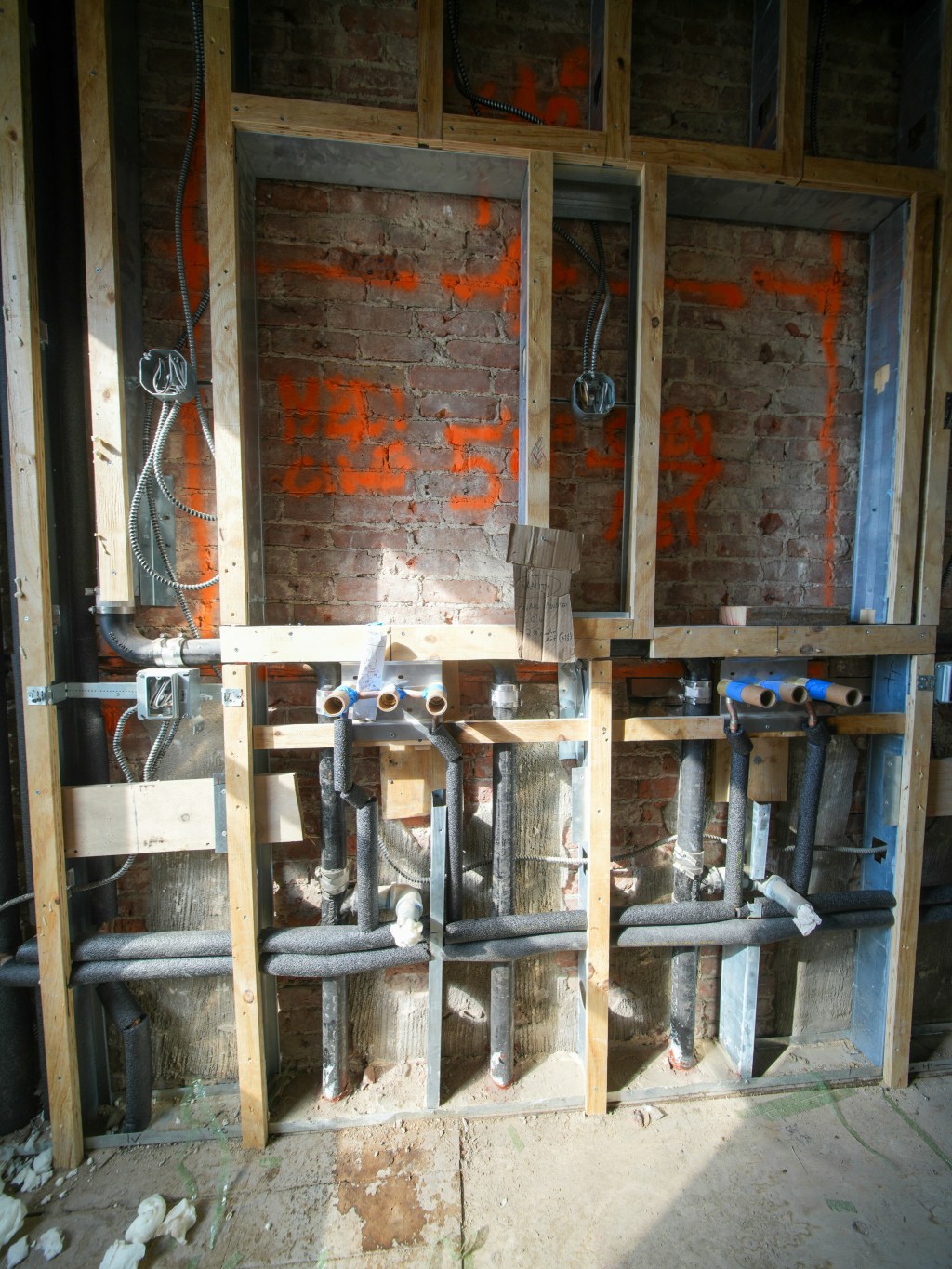
6️⃣ Services Within the Wall
Internal walls often contain:
- Electrical wiring
- Plumbing
- Radiators
- Gas pipes
All services must be safely rerouted by qualified trades.
🏘️ Special Considerations in UK Homes
Many UK properties (especially Victorian and pre-1930s homes) have:
- Timber joists spanning onto internal walls
- Shallow foundations
- Masonry party walls
- Irregular load paths (meaning elements are stacked on top of eachother).
What looks simple in modern homes can be more complex in older properties.
💷 How Much Does It Typically Cost?
Costs vary depending on span and complexity, but typically:
- Structural engineer design: £450 – £950 (higher end of the spectrum often includes an initial site visit)
- Steel beam supply & install: £1,500 – £3,500+
- Building Control fees: £200 – £400
- Making good & finishes: varies significantly
Complex removals (chimneys, multiple floors/walls, extra wide openings) will cost more.
🧠 Final Advice From a Structural Engineer
Removing an internal wall is usually straightforward — when designed properly.
The key principles are:
✔ Confirm whether it’s load-bearing
✔ Ensure proper structural design
✔ Maintain a clear load path
✔ Obtain Building Control approval
✔ Use experienced contractors
The biggest risks come from:
- Assuming a wall isn’t structural
- Using “rule of thumb” beam sizes
- Skipping professional advice
A relatively small upfront investment in structural design prevents costly cracking, movement, and safety concerns later. It is better to have this done properly from the outset than to get engineering advice when things have gone wrong already, at which point it might be too late!
 HM Structures
Leave a comment