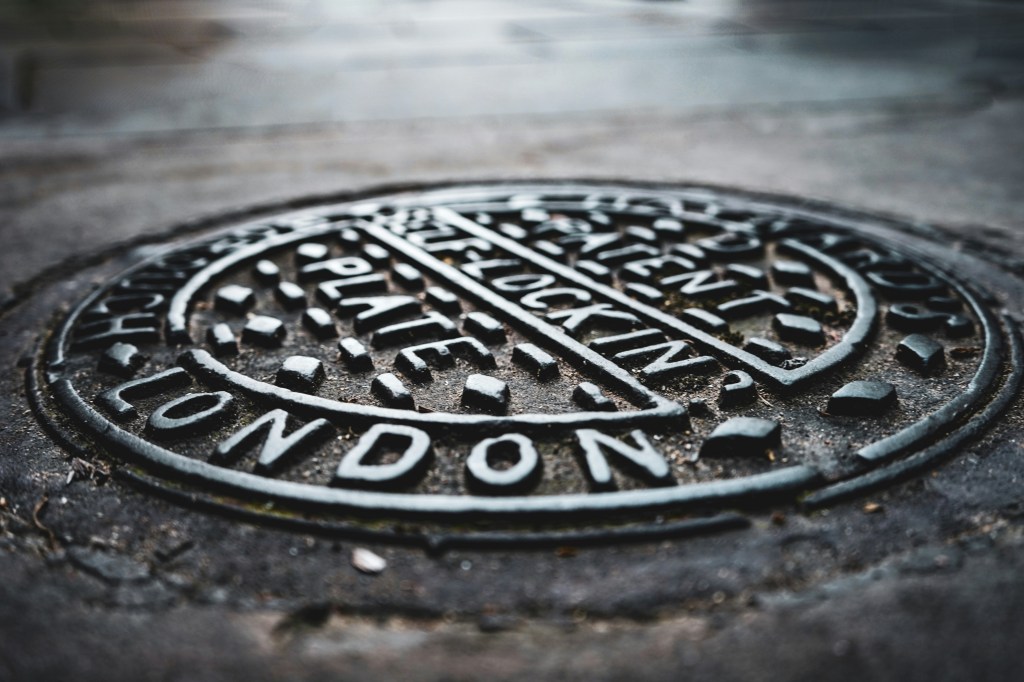
The typical drainage systems used in the UK are categorized based on the type of effluent they carry and the configuration of the pipework. These systems are governed by national building regulations and technical standards to ensure public health and environmental protection.
The primary types of drainage systems include:
1. Separate Systems
This is the most common drainage layout for modern developments in the UK. It uses two dedicated sets of pipes:
• Foul Water Drainage: Conveys “blackwater” (sewage containing faecal matter or urine) and “greywater” (waste from sinks, baths, and showers) to a wastewater treatment plant.
• Surface Water Drainage: Collects “clean” runoff from roofs and paved areas to discharge it directly into watercourses, soakaways, or the ground.
2. Combined Systems
Common in older urban areas, a combined system carries both foul sewage and surface water in a single pipe. While simpler and less expensive to install initially, the entire volume must be treated at a plant, and heavy rainfall can lead to Combined Sewer Overflows (CSOs), where untreated effluent may be discharged into rivers to prevent the system from backing up.
3. Partially Separate Systems
This is a compromise between the two previous systems. It consists of two drains: one conveys only surface water, while a combined drain conveys all foul discharge along with a portion of the surface water runoff.
4. Sustainable Drainage Systems (SuDS)
SuDS are increasingly required for new developments to manage surface water in a way that mimics natural drainage. They aim to reduce runoff rates, manage water quality, and provide amenity or biodiversity benefits. Typical components include:
• Source Controls: Green roofs, pervious pavements, and rain gardens (bioretention areas).
• Infiltration Systems: Soakaways and infiltration trenches that allow water to soak into the ground.
• Conveyance and Storage: Swales (vegetated channels), detention basins (dry depressions), and retention ponds (permanent pools).
5. Non-Mains Drainage
In rural areas without access to public sewers, properties rely on independent treatment systems:
• Septic Tanks: Watertight chambers where bacteria liquefy sewage before the liquid is discharged into a drainage field.
• Sewage Treatment Plants: Use mechanical and biological processes to treat sewage to a higher standard than septic tanks, often allowing discharge to a watercourse.
• Cesspools: Fully sealed tanks used for storage only; they do not treat or discharge waste and must be emptied regularly.
What is the minimum distance between new foundations and public manhole/sewers?
The minimum distance required between new foundations and a public manhole depends primarily on the depth of the sewer and the diameter of the pipe. The following clearances are usually required to be maintained:
• For sewers up to 1.1 metres deep: No part of the new structure or foundation must be in contact with the manhole, and a minimum distance of 150mm must be maintained from the outside of the chamber wall.
• For sewers more than 1.1 metres deep: The new foundation or structure must be at least 500mm away from the public manhole.
• For sewers with a diameter between 160mm and 375mm: If the sewer invert is more than 1.5 metres deep, the foundations must be at least 1.0 metre from the manhole.
• For sewers more than 2.0 metres deep: Foundations must run at least 1.0 metre away from the sewer.
Additional Restrictions and Requirements
• Prohibition of Building Over: Public manholes must not be built over or located inside any proposed structures, even if they are fitted with new double-sealed, bolt-down covers.
• Repositioning Access: If a proposed building footprint would cover a manhole, the access point must be repositioned to a suitable agreed standard outside the building to ensure the Water Authority maintains access for maintenance and repairs.
• General Accessibility: General guidelines for residential extensions require that access points such as manholes, inspection chambers, or rodding eyes remain outside the new building and at least 500mm away from it.
• Piled Foundations: If using piled foundations, they must be constructed at least 1.5 metres (or twice the pile diameter, whichever is greater) from the outside of the sewer. Driven piles are strictly prohibited within 15 metres of a public sewer.
What is the minimum fall for foul and surface water pipes?
The minimum fall (gradient) for drainage pipes depends on the type of water being conveyed (foul or surface), the diameter of the pipe, and the number of appliances or properties connected to the system.
Foul Water Pipes
For foul water drainage, the goal is to maintain a self-cleansing velocity (typically 0.75 m/s) to prevent the accumulation of solids. The sources provide several specific requirements based on pipe size:
• 100 mm (DN 100) Pipes:
◦ If at least one WC is connected, the minimum gradient is 1:80.
◦ If no WC is connected (waste water only), a steeper gradient of 1:40 is required.
• 150 mm (DN 150) Pipes:
◦ The minimum gradient is generally 1:150, provided that a minimum of five WCs or ten dwelling units are connected to ensure sufficient flow.
• Maguire’s Rule: This is a common rule of thumb for minimum gradients:
◦ 100 mm pipe: 1:40.
◦ 150 mm pipe: 1:60.
◦ 225 mm pipe: 1:90.
Surface Water Pipes
Surface water drains are generally laid to flatter gradients than foul drains because they are less likely to “slime,” although they must be able to move grit and debris.
• 100 mm (DN 100) Pipes: These should be laid no flatter than 1:100.
• 150 mm (DN 150) Pipes: These should not be laid flatter than 1:150.
• General Rule (1:DN): For small diameter drains (less than DN 300), a general rule is to specify a gradient of at least 1:DN (e.g., 1:150 for a 150 mm pipe).
• Low-Flow Conditions: If the flows are expected to be very low, steeper gradients (up to 1:DN/2.5) may be required to prevent blockages
When do i need to use a rodding eye?
You need to use a rodding eye (also known as a rodding point) in several technical and strategic scenarios within a drainage system.
Strategic Locations
Rodding eyes are required at specific points where blockages are most likely to occur or where the pipe configuration changes:
• Head of a Drain Run: They must be provided on or near the highest part (head) of each drain run.
• Changes in Direction or Gradient: Access is necessary at every bend and every change of gradient in the pipework.
• Changes in Pipe Size: You must install a rodding point wherever there is a change in the size of the sewer or drain.
• Junctions: They are required at a junction unless each run can be cleared from another nearby access point.
• Specific Fittings: Access is mandatory where drainage fittings like intercepting traps or anti-flooding devices require regular maintenance.
Economic and Practical Considerations
• One-Way Access: You should use a rodding eye when only downstream access is required to clear obstructions.
• Cost Efficiency: They are a cost-effective alternative to larger manholes or inspection chambers, particularly in the higher parts of a drainage system where the volume of excavation required for a deep chamber would be unnecessary.
• Space Restrictions: Because they are small-diameter connections, they are useful when space is limited.
Distance and Spacing Requirements
Rodding eyes are necessary to ensure the system is maintainable across long distances:
• Long Straight Runs: They are required on long runs to ensure no part of the pipe is out of reach for cleaning rods.
• Maximum Spacing: Technical standards specify that a rodding eye should be placed no more than 22 meters from the start of an external drain and no more than 45 meters from an inspection chamber or manhole.
Where in doubt, always consult with a professional to get the right guidance/advice.
 HM Structures
Leave a comment