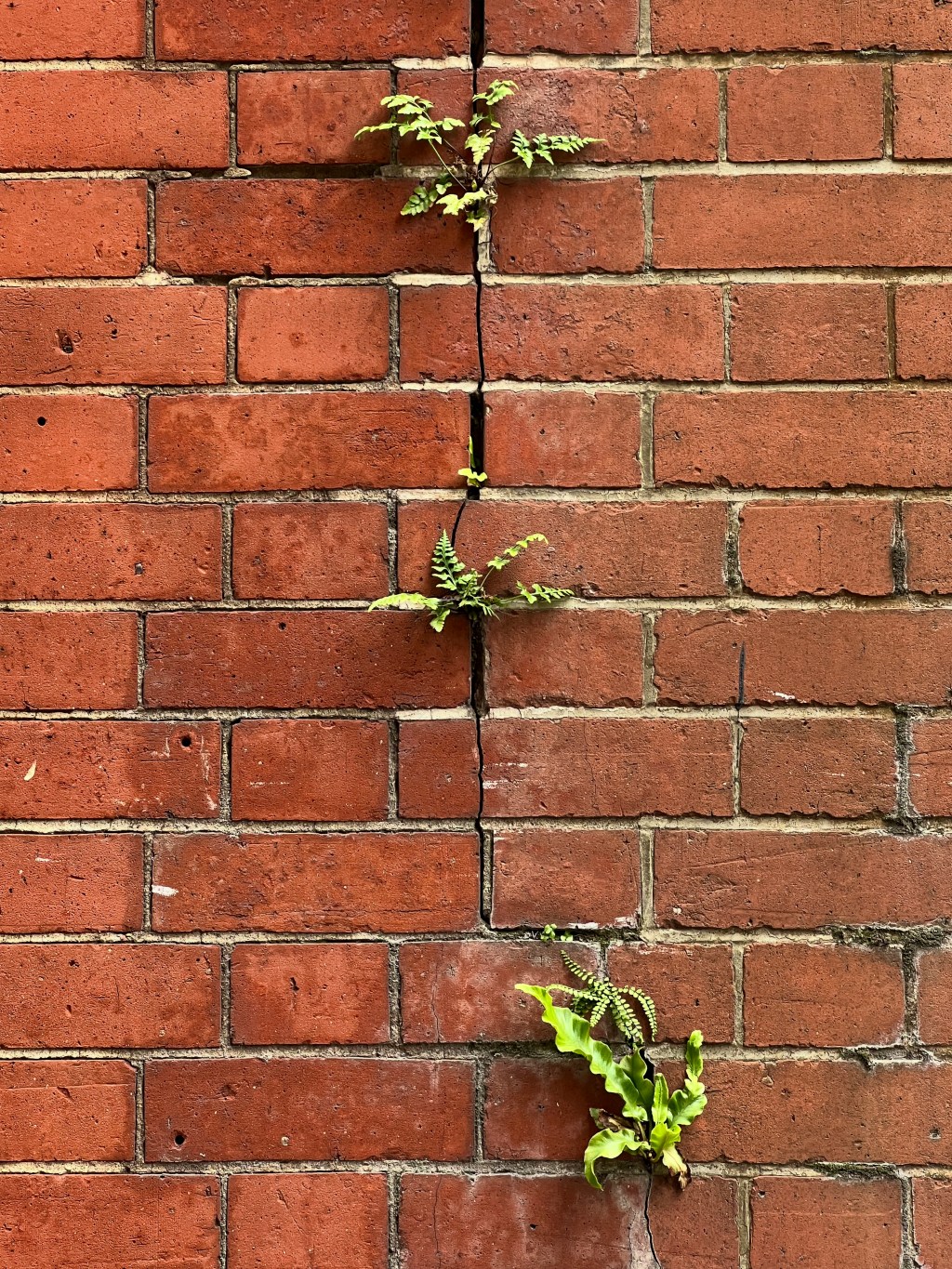
Foundation movement in the UK is primarily categorized as subsidence (downward movement caused by ground activity) or heave (upward movement caused by soil expansion). While initial settlement (bedding down under a building’s own weight) is normal for new structures, true subsidence is typically triggered by external environmental factors.
The main causes of foundation subsidence in the UK include:
1. Shrinkage and Swelling of Clay Soils
This is the most common cause of subsidence, accounting for approximately 70% of all insurance claims.
• Desiccation: Highly plastic clay soils (prevalent in South East England) contain plate-like minerals that hold water like a jelly. When moisture is removed, these soils shrink in volume.
• Vegetation Influence: Trees and large shrubs exacerbate shrinkage by extracting moisture through their roots during the growing season. Oak, willow, and poplar are notorious for high moisture demand. Damage is most frequent during “surge years” characterized by exceptionally hot, dry summers, such as 1976, 2003, and 2022.
• Shallow Foundations: Older properties with foundations less than 0.9m to 1m deep are most vulnerable, as they are founded within the zone where seasonal wetting and drying occur.
2. Erosion and Leaking Drains
Approximately 30% of claims not related to clay involve leaking or broken drains.
• Washing Away of Fines: In permeable soils like sands and silts, escaping water can wash away fine particles, creating voids and loosening the ground beneath foundations.
• Soil Softening: Escaping water can also saturate and soften the ground, reducing its ability to support the building’s weight.
3. Compression of Fill and Made Ground
Building on non-engineered fill or “brownfield” sites presents significant risks.
• Self-weight Consolidation: Poorly compacted material may slowly consolidate over decades.
• Collapse Compression: Certain loose fills (such as opencast mining backfill) can suffer a sudden, dramatic reduction in volume if they become inundated with water for the first time, such as from a rising water table.
4. Mining Subsidence and Natural Cavities
• Historic Workings: Collapse of old mine shafts or “pillar and stall” workings (used for coal, salt, limestone, or tin) can cause sudden surface craters or gradual depressions.
• Solution Features: In areas with soluble rocks like chalk or limestone, percolating groundwater can dissolve the rock to form natural cavities (swallow holes) that eventually collapse.
5. Other Environmental Factors
• Groundwater Variations: Water abstraction, regional drainage schemes, or the cessation of industrial pumping can cause the water table to rise or fall, affecting the stability of peats, silts, and loose sands.
• Soft Ground: Materials like peat or alluvial silt are highly compressible and may continue to settle over many years even under modest loads.
• Slope Instability: On hillsides, soils may experience slope creep (slow downhill migration) or sudden landslips, often triggered by heavy rainfall or excavations that remove lateral support.
So subsidence is confirmed – what can be done to prevent it from getting worse?
Repairing foundation subsidence involves a range of techniques that either strengthen the building’s foundations (underpinning), modify the ground conditions, or stiffen the building’s superstructure to resist further distortion.
1. Underpinning Methods (Extending Foundations)
Underpinning is the process of extending existing foundations downward to reach stiffer, more stable ground.
• Mass Concrete (Traditional): This method involves excavating short sections (typically 1–1.4m long) beneath the existing foundation in a specific sequence to avoid destabilizing the wall. These “bays” are filled with concrete to within a small gap of the existing footing, which is then tightly “pinned up” using a dry-packed mortar mix. It is generally limited to depths of 2m to 2.5m due to high labor costs and safety risks in deep excavations.
• Pier-and-Beam (Beam and Base): A reinforced concrete beam is installed within or below the existing wall, spanning between discrete mass concrete piers founded at stable depths. This is often more economical than continuous mass concrete for bearing strata at depths of 3m to 5m.
• Mini-Piling: Slender piles (typically 100mm to 300mm diameter) are driven or bored into the ground and connected to the building via needle beams, cantilevered caps, or by drilling directly through existing footings. Mini-piling is advantageous in restricted access areas or where bearing strata are very deep (over 5m).
• Jacked Piles: Hydraulic jacks are used to force precast concrete or steel pile segments into the ground until they reach a predetermined resistance. This method is vibrationless, making it suitable for severely distressed structures.
2. Ground Stabilisation and Mitigation
In many cases, the cause of the movement can be addressed directly to stop further subsidence without the need for underpinning.
• Tree management: If subsidence is caused by clay shrinkage, removing or severely pruning the offending trees can allow the soil to rehydrate and the building to stabilize. However, if a tree predates the building, removal can cause “heave” (upward movement as the soil swells), which may require its own remedial measures.
• Drain Repair: Subsidence caused by soil erosion in granular soils (sands/gravels) can be arrested by repairing leaking or collapsed drains. Techniques include traditional excavation or non-disruptive plastic lining systems.
• Geopolymer and Grout Injection: Expansive geopolymers or cementitious grouts can be injected into the ground to fill voids, compact loose soil, or reduce the shrink-swell potential of clay. Geopolymer injection can even be used to jack a building back to its original level.
3. Superstructure Strengthening
These methods redistribute loads and stiffen the building’s response to movement, often used when movement is very slow or the primary cause has been removed.
• Tie Rods and Strapping: Steel rods or galvanised straps are used to anchor walls together or tie them into floor and roof structures to prevent leaning or bowing.
• Brick Stitching and Bed Joint Reinforcement: Stainless steel helical bars are grouted into horizontal mortar joints across a crack to “stitch” the masonry back together and reinstate structural integrity.
• Resin Bonding: Cracks can be injected with epoxy resins to bond fractured masonry units, followed by repointing for aesthetic matching.
• Corseting (Hoopsafe): A reinforced concrete beam is cast around the building’s perimeter at foundation level and post-tensioned to compress the structure, helping it bridge areas of localized ground movement.
 HM Structures
Leave a comment