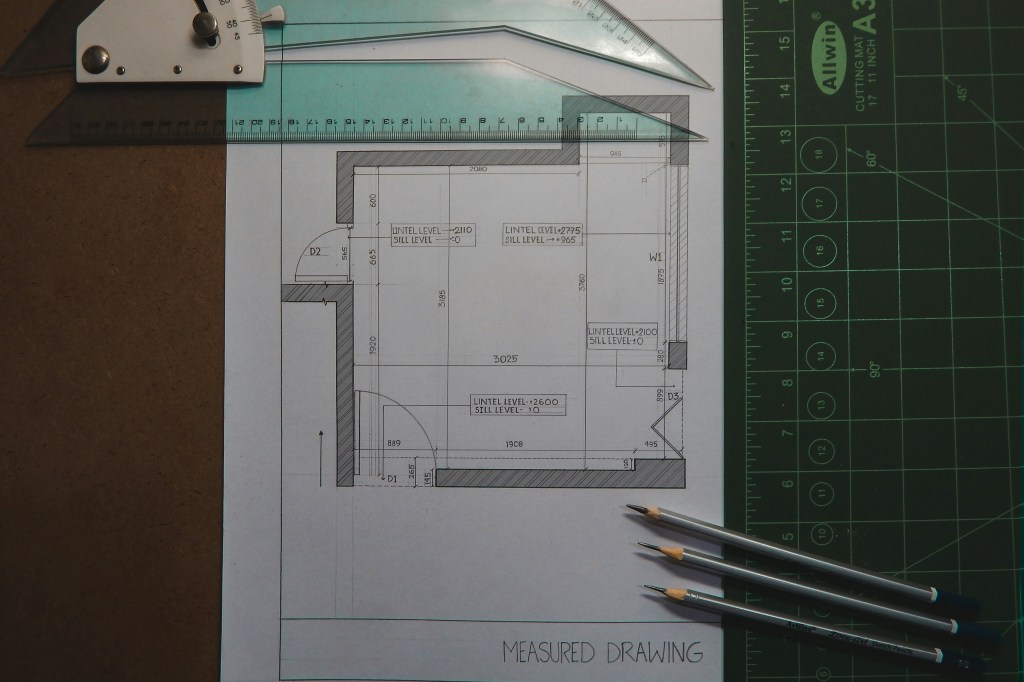
If you’re thinking about extending or improving your home, you may be wondering:
“Do I need planning permission for this?”
In many cases, the answer might actually be no, thanks to something called Permitted Development Rights.
Understanding these rights can save you time, money, and a lot of paperwork — but it’s important to know the rules clearly.
Here’s an easy-to-follow guide to help you understand what you can do without planning permission, and where you still need to be careful.
🧱 What Are Permitted Development Rights?
Permitted Development Rights (PDR) are rules set by the UK Government that allow homeowners to carry out certain types of home improvements without applying for planning permission.
They are designed to make it easier to:
- Modernise your home
- Make better use of space
- Add value
- Improve your living conditions
…all without unnecessary red tape.
However — and this is important — PDRs have limits, and they don’t apply to all homes.
🏘️ Do Permitted Development Rights Apply to All Properties?
Not always.
You may not have permitted development rights if:
- You live in a flat or maisonette
- You live in a listed building
- You are in a conservation area, Area of Outstanding Natural Beauty, National Park, or World Heritage Site
- Your home has had its PDRs removed by the council (known as an Article 4 Direction)
If you’re unsure, your local authority can confirm, or a planning consultant can advise.
🔨 Common Examples of Permitted Development (Without Planning Permission)
Here are the most popular projects UK homeowners can usually complete without needing planning permission — as long as the rules are followed.
1️⃣ Single-Storey Rear Extension
You can often build a rear extension up to:
- 3 metres deep for a semi-detached or terraced house
- 4 metres deep for a detached house
Under the Neighbour Consultation Scheme, these can be extended to:
- 6 metres (semis/terraces)
- 8 metres (detached)
As long as:
✔ It’s not higher than 4 metres
✔ It uses similar materials
✔ It does not cover more than 50% of your garden
2️⃣ Loft Conversion
One of the most common PDR projects.
You can usually convert your loft without planning permission if you stay within these volume limits:
- 40m³ for terraced houses
- 50m³ for semis and detached houses
And provided that:
✔ The roof height isn’t raised
✔ Side-facing windows are obscure glass
✔ Dormers are set back from the eaves
This makes dormer conversions extremely popular.
3️⃣ Garage Conversion
Converting an existing attached garage into a living space often falls under PDR — as long as you don’t enlarge the structure.
Garage conversions still require:
- Building Regulations approval
- Proper insulation, ventilation, and structure checks
But planning permission is rarely needed.
4️⃣ Outbuildings & Garden Rooms
You can often add:
- Garden offices
- Studios
- Sheds
- Gyms
…without planning permission.
Key rules:
✔ Max height 2.5m if within 2m of boundary
✔ Cannot be used as a separate dwelling
✔ Cannot take up more than 50% of your garden
5️⃣ New Windows, Rooflights & Doors
Most homeowners can install new:
- Skylights
- Velux windows
- Patio doors
- Standard replacement windows
…under PDR, unless the property is listed or in a protected area.
6️⃣ Internal Alterations
You generally do not need planning permission for internal changes such as:
- Moving walls
- Creating open-plan areas
- Renovating kitchens or bathrooms
However:
👉 Removing a load-bearing wall requires a structural engineer and Building Control approval.
7️⃣ Two-Storey Extensions (Some Cases)
These are more restricted but can still be done under PDR if:
- Placed at the rear
- Not closer than 7m to the rear boundary
- Use similar materials
- Roof pitches match the existing house
Not many homes meet the criteria, but it is still possible.
8️⃣ Porches
A porch can generally be added under PDR if:
- It’s under 3m²
- It’s under 3m high
- It’s at least 2m from a road
Perfect for a small entrance makeover.
✔️ Important: Permitted Development Still Requires Building Regulations
Even if your project doesn’t need planning permission, you must still comply with Building Regulations, including:
- Structural safety
- Fire safety
- Insulation
- Drainage
- Steel beam design (if removing walls)
- Electrical and plumbing safety
This is where professionals — like structural engineers — play an essential role.
🧠 Should You Get a Certificate of Lawfulness?
Although optional, many homeowners choose to apply for a Lawful Development Certificate (LDC).
This gives legal proof that your project was permitted development.
It’s especially helpful when selling your home in the future, as buyers often ask for it.
🏁 Final Thoughts
Permitted Development Rights offer a great way to improve your home without the stress of full planning permission, but they must be used carefully.
Before starting your project:
✔ Check whether your home qualifies
✔ Make sure your design meets the PDR rules
✔ Speak to a structural engineer if structural changes are involved
✔ Apply for Building Control approval
✔ Consider getting a Lawful Development Certificate
With the right advice, Permitted Development can be a fast, efficient and cost-effective way to create more space and add value to your home.
 HM Structures
Leave a comment